stupid questions IIa
January 2023–March 2023

Continued from:

Twitter thread here:


Why does Finland have so many lakes?
Why were there so few naval battles in the Caspian sea?
Why are casualties from ships sinking so high? Difficult to survive swimming in cold ocean water for long? Ship sinks fast and a lot of people are inside and can't get out? Lots of explosives and internal fires? Or just no rescue? And how does it change in age of sail, steam etc.
Why do fighters tilt on their side to dive?
Why do the biggest animals live in grasslands instead of forests or jungles? (both now and in general...? late Pleistocene extinctions provide some filter but don't change this pattern, I think)
Is pastoral nomadism more or less susceptible to boom-bust population cycles than farming?
How much intermarriage was there between the factions during the three roman civil wars (Marius/Sulla, Caesar/Pompey, Octavian/Antony)? One elite in one city—did the average Roman have relatives on the other side, to an even higher degree than other civil wars?
Which phenotype niches change the least? Sharks, horseshoe crabs...? What's the story for why these animals/shapes/designs in particular?
Why were horses hunted to extinction in the Americas but not Eurasia?
Did it bother any ancient writers that Rome became Christian and collapsed soon after?
Maybe the Eastern Roman persistence + paganism being rare enough at that point meant it didn't come up. (though looks like it came up at least somewhat, https://en.wikipedia.org/wiki/The_City_of_God)Why was Byzantine iconoclasm influenced by islam, both a military enemy and a separate religion? Or just a coincidence (some precedent for anti-(enemy religion)-idols in its past)? Some misfire of the Henrichian "win stay, lose shift" blind cultural copying, that so helped Japan?
Why the 90-95% agricultural producer # across agrarian economies? Why not 80%, 60%... is it basically a malthusian/marginal reason, that with the richest land they could feed at a 1:3 ratio, but that land is used, then they go to the 1:2 marginal land, etc. until its near 1:1?
Why did French soldiers wear red pants?
“At one time, there were detailed contemporaneous histories on Caligula, but they are now lost.
Caligula's sister... wrote an autobiography... it too is lost.”
When does the last copy of a lost work typically go extinct? Within a few generations? All at once in destructions of libraries?What additional % of lost works can we expect to eventually recover, for different time periods, as a % of extant corpus. 1%? 10%...?
A little puzzled by the succession problem faced by Augustus. In a normal succession problem, tradition limits candidates to either one (firstborn son) or a small pool, and if they are too young, incompetent, or nonexistent, or if there are too many of them, there's a problem.
Augustus seemed to be using family ties (marriage into his family and/or adult adoption) to make candidate 'heirs'; but he was also willing to just pick someone (Agrippa, before his death) and he was willing to exile/possibly kill his adopted son (Agrippa Postumus), had no real reason to like Tiberius, after the 7 year self exile... my confusion is why, given there were no imperial traditions at all, he didn't just select the most competent and well-dignitas'd senator he could find, and either adopt them, or just make the succession line clear— like he did for Agrippa, given that all his other chosen heirs died over the course of his very long life and reign, and he was forced back into the selection of Tiberius.
(Possibilities:
-because of the fuzzy legal situation, he thought he'd only get broad agreement with a family relation-he thought Tiberius directly, or as a puppet of other interests, would contest the succession if it were anyone else, and so there was no going around him
-he didn't like or trust anyone in the senate as much as Agrippa (??)
-he did think Tiberius was a reasonably good choice, and would have taken some other drastic measure if he was visibly insane, fell off a horse, etc.
At any rate he solved the succession problem in his lifetime—an uncontested transition of power—but the wheels came off remarkably quickly; Augustus to Caligula in 3 generations.)Why is "Northern" California like 70% of the state?
Why the convergent evolution of revolutions immediately starting their own calendar? https://en.wikipedia.org/wiki/Chichibu_incident#Uprising
Have there been any reviews or updated reflections on the Superintelligence, Age of Em etc. era of books in light of what we've learned about what AI will probably look like since, the more recent the better? [January 2023]
I don't really understand why the massacre of the Latins happened; was there an unusual amount of Latin-Greek ethnic hatred, compared to elsewhere? Is that just the usual level for market dominant minorities in port cities of that era, every city would do the same given the opportunity and it’s only dampened by top down repression, which was removed here? What's the rate-limiting factor on these urban ethnic cleansings?
Did ancient astronomy have any practical benefits at all? Two I can imagine:
-helps time the growing season
-helps legitimate priests if they can predict celestial events in advance
But did it? Or was it just a side effect of social complexity, no extra productive benefit? (or did this vary significantly in place and time)If Google search has degraded so badly, why isn't there a clear replacement/what are the % contributions from:
-it hasn't (unlikely)
-adversarial SEO red queen (competitors can't do better)
-typical users don't care | most users don't care enough to change their finger cache
-I don't know the term (monopoly credible deterrence?): if competitor did clearly improve, Google would dump its huge capital into fixing search and drive competitor back to unprofitability, so not worth investing
-other [January 2023]Typical LLM outputs are very close to right, but with trace errors or misunderstandings. To the extent these are random, could you run the same query 10-1000 times and get the output from a 2nd filter LLM that summarized the commonalities of those responses? [January 2023]
When was the political theory {Socrates/Plato/Aristotle->(time jump) Machiavelli, Hobbes/Locke/Rousseau, Smith/Marx} linear tradition invented? Not arbitrary but not especially deterministic, either. Is it a Hutchins era narrative, or older? Is it parochial to the US/anglo countries?
Why did great apes lose their tails
Does species diversity cycle up/down along with supercontinent cycles?
Some mild bafflement about the sequence of roman civil wars from Marius/Sulla, Caesar vs Pompey, Caesarians vs Liberators, and Octavian vs Antony: while previous Roman wars were against external states/peoples and “about” which overall national-ethnic bloc would triumph, in the sense that one collective would get conquest spoils, increased territory, improved rank in the new imperial order, and future security; and the other would get slavery and annihilation; in the RCWs, the stakes seem more like the private personal disputes of top generals, for offices, conquest opportunities and immunity from prosecution; and the entire edifice of the state/army/people was sort of dragged along with it, generations of fathers/sons cast into the bonfire and provinces taxed to immiseration, for the sake of these personal disputes; personal in the sense that:
-typical Romans gain nothing (though legions get bonuses and elites in their patronage pyramid get offices/confiscated wealth, in expectation this is negative value, if both sides start equal)
-there is no ethnic difference at all, just collecting legions where they can find them
-there is no real ideological difference either; maybe the closest in the intermediate phase, of principate vs. republican values
-conflict 'makes sense' from POV of political-military elites rewarded in the past for relentless aggression, + their close staff of retainers and elite staff; but everyone else would have been better off if they came to an agreement or if one of them suddenly died; at stake is a stable cultural/political order and only who gets to run it, nothing else
-biggest exception is maybe the military land reforms/military socialism aspects, of huge land seizures from Italians to settle retiring legions (and exemptions from this for the wealthy/senatorially connected); real mass stakes and gain/loss there; and elite property redistribution during the sullan and triumvirate proscriptions. but again, negative expected value for that class, I'd think.
Insofar as the late republican political system of privatized personal campaigns of external conquest as the main vehicle of political advancement, + legions personally loyal to general, + loot from conquest used to bribe electorate, with result of destabilizing prototyrants attempting to escape retribution from the jealous, elite-egalitarian, punitive, and fairly corrupt Roman legal system + informal assassination system; and the inability of the republican state to bind EITHER the generals OR their legions very directly; then the wars were in some sense a cancer naturally growing out of the ballooning expansion, returns to conquest, and lack of disciplining external forces capable of threatening extermination; but a cancer who was mostly "for" the top elites, not really anyone else.
(possible this is a misreading and elite overproduction and/or land hunger meant there were big client bases for each faction in the successive civil wars and they were in some sense continuous with Rome vs Gaul, Rome vs Carthage.... but the difference is that Romans switched sides freely, bribed each others legions, allocated provinces in the pre-civil-war by discussion rather than any other factor, had many intermediate/moderate go-betweens, were connected by family ties, and re-unified at end of warlord era)In a counterfactual world where nukes don't work but tech otherwise progresses, how bloody is great power war? Specifically: how much does high capital/high tech air and artillery power obsolete the 'millions of soldiers holding rifles and supplied by rail/cart' WW2 model of offensive war between great powers? The answer to this calibrates how many lives nuclear peace is saving in the WW3 counterfactual, vs expected value of (death in nuke war * probability);
Can imagine tactical picture is like desert storm and mass distance attack is not possible, but at the same time, with WW2 as a guide, in real war sides won't give up until forced to when most cities are burned and invasion is looming. So probably still a huge death toll even if armies per se don't scale meaningfully with more manpower.
(Ukraine vs. Russia may speak to this, idk) [February 2023]Why did Replika cut sex from their service? Isn't that the market? [February 2023]
How does a gravity assist from the moon work
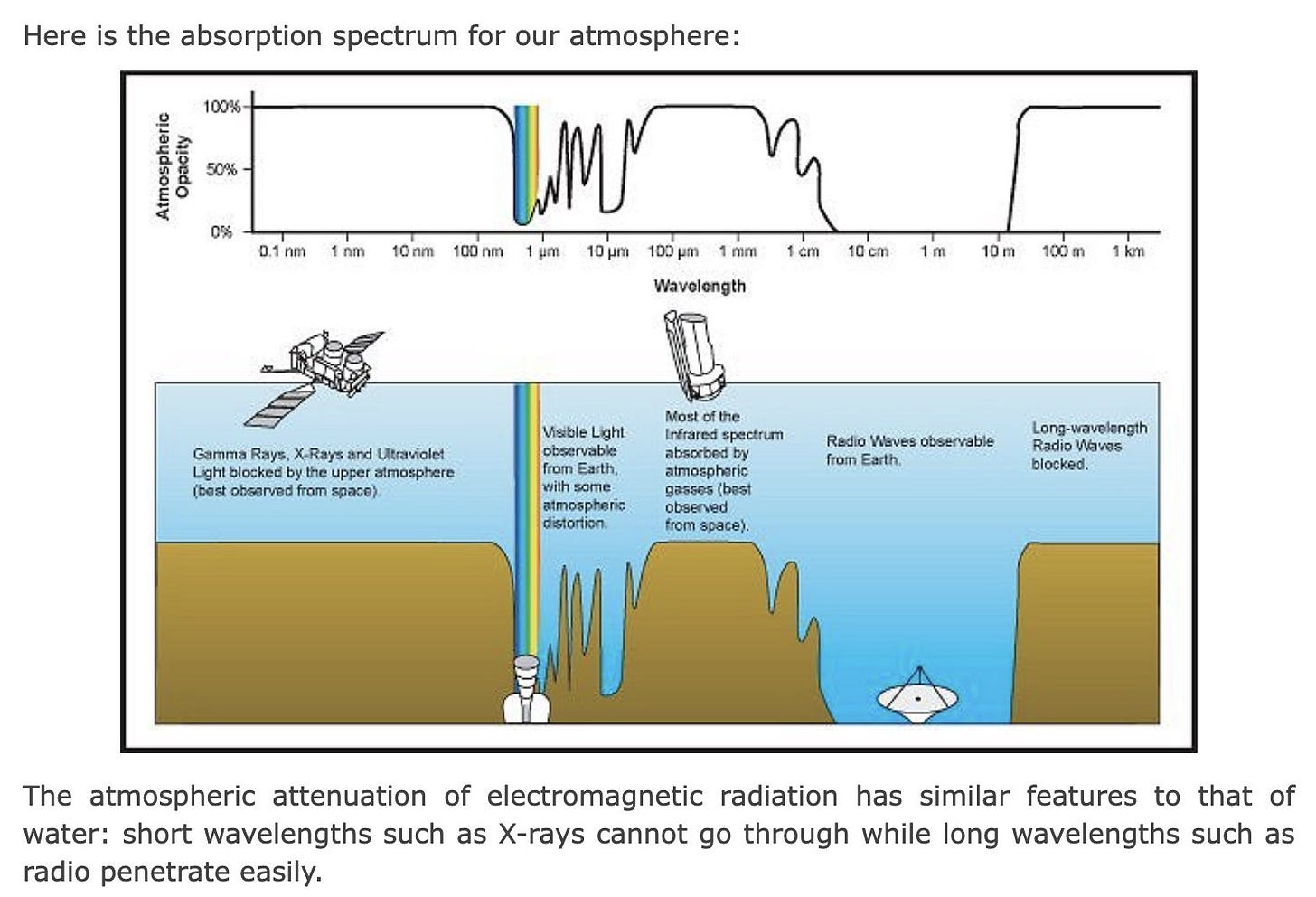
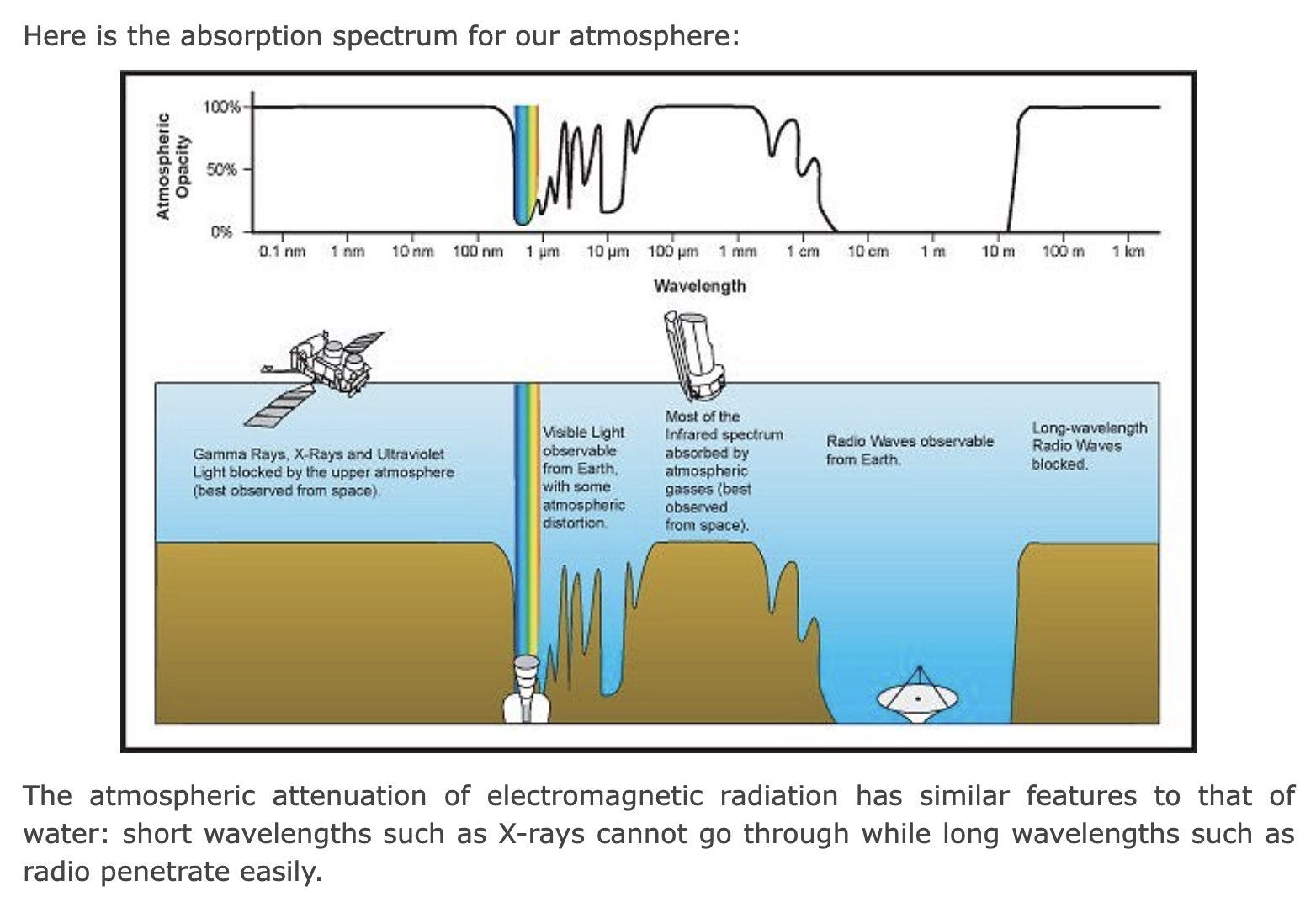
Why is there a two trough (rather than 1) absorption spectrum of the atmosphere? Visible light (+ a bit more) and radio waves get through, but long wavelength radio waves, infrared, and gamma rays/x-rays/UV blocked.
 🌌 Observer of Suns@ObserverSunswhy are there no descendants of tetrapods with six limbs in their normal body plan? it doesn’t seem like it would be enormously difficult to evolve, given that in the short time humans have been looking there have been plenty of documented cases of animals born with extra limbs.12:38 PM · Feb 10, 2023 · 1.03K Views3 Replies · 7 Likes
In the Sahlins original affluent society picture, what's the main ecological/malthusian check on population? Homicide? [slight repeat]
(vague) How much interstellar and longer trade would there be in a mature/close to tech ceiling civilization, vs. just growing everything on site and not paying energy transaction cost of accelerating/decelerating matter in transit?
How much cultural/IP exchange with time lag?
(some treatment of the physical side here:
http://toughsf.blogspot.com/2017/03/interstellar-trade-is-possible.html
When resources are distributed unequally and it's cheaper to ship than manufacture or replace, then gains from material trade. Not much about the 'grow civilization on site' consideration. Krugman’s old paper https://en.wikipedia.org/wiki/Space_trade#Theory_of_Interstellar_Trade)Has anyone done case studies of candidate medium term AI industrial accidents? "Warning shots" in the sense of:
1. generating public fear and loathing
2. embarrassing PR disaster, corp brand damage
3. a classic industrial accident that kills a lot of people &/or destroys a lot of wealth and property, digital or otherwise
4. possible international incident between any pair of tense neighbors
i.e. something Chernobylesque that would reconfigure the regulatory and political space.How did they repair transatlantic cables in the 1800s?
 Jason Crawford@jasoncrawfordShips sailed using the wind for thousands of years before powered transportation… So why was the wind never used on roads? Why no carriages or wagons with sails? This was actually attempted in the late 1700s! But the wagons were too hard to control—and you can't tack on land
 10:31 PM · Feb 18, 2023 · 37.3K Views11 Replies · 11 Reposts · 124 Likes
Why domesticated horses but not deer? (some mix of their behaviors made it harder + they live in areas where population is less dense (=less optimization power) + once other herbivores domesticated, prefer to use land/labor on them instead of trying marginal next domestication candidate. [?])
More abstract version of this question is how LLM thinking will change human thinking in general, the way computer chess changed chess style even when not playing assisted by a computer (though most future thinking will be alongside LLM prostheses, or something similar).
More of a comment than a question... I don't really "get" Mitochondrial Eve
Could time travelers to the past accelerate growth much? An analogy: why can't "time travelers" from the growth frontier reproduce that level of development in relatively backward countries?
1. less human capital and other capital: missing inputs
2. people don't like changing their way of life and being told what to do by outsiders
3. local equilibria where additional wealth is quickly snatched by local predators and parasites, making them stronger, and also attracting further predators; and individuals are induced to defect/discoordinate from the growth pattern
Since it's proven hard to break this pattern in the present world, which also has the advantage of exposure to the global economy/global supply chains of raw materials, finished goods, services, human capital, export markets—which time travelers don't get—I'd say no.Realized I don't understand at all why hermaphroditism isn't common or universal in animals. The benefits of sex (escape from parasite overfitting, faster combination of adaptations, escape from Muller's ratchet, fitter grandchildren in expectation), somewhat counterintuitively, outweigh the costs, namely that half the breeding population doesn't replicate itself though it builds entire soma that could easily do so (either from the organism offspring POV, or the species POV; slightly different); but hermaphrodites square this circle, no cost all benefit. it must be something like:
1. Just reproducing is the easy part, viable offspring surviving is the main bottleneck. True for k-selected w parental investment but I don't think it's true in general.
(also saves the finding a mate search & predation costs) [*(also saves the finding a mate search & predation costs): nevermind, this is only true if they self fertilize and give up the benefits of sex, which is unrelated to this question. Ignore.]
2. Not possible to compete as a male on the margin w/o really trying, which means specializing, which means it's not worth it to build male sex organs unless fully specializing in the male phenotype; this has some weight, but they're so cheap as a % of soma, it really never pays?
**should note hermaphrodite reproduction doesn't avoid the highest cost of sex from the organism POV, only getting 50% dna per offspring instead of 100% from asexual. I don't think that affects the above but worth clarifying.
Picturing an agent based model with pure male, pure female, and mixed M/F phenotypes. Each generation, males and females have same number of offspring in expectation (each offspring has one M one F parent). Depending on parameters, could imagine the mixed gets outcompeted from the ends, so that it’s more efficient to specialize totally in one role and get the marginal benefits of specialization? Even if very small, <1% difference enough to drive the middle morph to extinction. But why would this be true everywhere?To what extent is legal work zero sum? Large companies have a lot of lawyers because there's always more for them to do on the margin defensively/adversarially, not because there's a fixed pool of "law work" that needs to get done, is my naive impression [?] (with relevance to huge expansion of legal labor pool with AGI).
Or maybe: there's a lot of regulation compliance that's more fixed/positive sum, and then a lot of litigation that's basically zero or negative sum. (though regulation could be adversarial in the longer term dynamics—if it's cheaper to comply, government feels comfortable adding more.)Could run it the other way too—if lawyers are taxed at 2x rates, one side of litigation can afford less legal defense, but other side can afford equivalently less legal offense.
(maybe some inefficiency around fixed costs-- still need to deal with "a" lawyer for many small things)Basically, I don’t know.
Slightly confused why the internet era led to the fracturing of culture and the end of mass celebrities/sweeping cultural events (Did it? That's my impression). Is there a simple model of this?
On the one hand, back when there were three tv channels, mechanically not much variation in taste is possible; more variation in supply, more precise targeting of segments of demand. But against this, trend in zero marginal cost attention markets is towards free copying and distribution letting even slightly better performers capture most of the value away from even 1% worse performers who otherwise had their own captive local markets: 'winner take all markets' (also enabling a long tail of individually targeted niches, but main effect is perfect > good). Why didn't this keep happening, and so the best TV show continued to dominate the culture to the same or greater degree? Is it more because of quality copying and fewer clear standouts (why?), more because people's taste is more individually targeted and the taste landscape is very rugged? (like specialist species outcompeting generalists), something about the distribution channels themselves inducing the change... shrouded in fog.My sense is that forecasted AI timelines have 1) been moving up in the past decade at a greater rate than 1 year per year and 2) this is unusual in tech predictions, which normally maintains the moving "30 years from now" horizon. Is this true? Are there other examples of this sort of blueshifted future? I'd guess "time until nuclear war" from the 40s to 50s?
Pattern may not be that general or may be hard to specify, since within any given tech any surprise invention, development or mass adoption will -> moving up of whatever the timeline was. [March 2023] Ash Jogalekar@curiouswavefnWhat’s your favorite explanation for why linear physics equations like the Schrödinger equation work so well in spite of nature being largely non-linear?7:42 AM · Mar 5, 2023 · 51.5K Views60 Replies · 9 Reposts · 154 Likes
 Laura 🌲 ⛰️@LauraDemingIs there a good reason why many basic laws of physics are linear or quadratic (for example, F=ma), not much more complex? This might be a silly question - I'm just curious why this isn't true, or what kinds of laws we'd be unlikely to see.4:16 PM · Sep 19, 2020122 Replies · 87 Reposts · 989 Likes
Why is Midjourney still run out of a Discord? Instead of a website? UX of going back to it is confusion + total chaos.
(Your request is instantly buried by spam of everyone else of the channel; just idling is twitch chat stream of gibberish instead of blank page; and if you make variations they appear after 100+ random messages, not next to comparison image; subscribe to Midjourney + set up your own Discord server and add the bot to it seems to be the answer, there's no non-nauseating free-tier UX; on the plus side, the outputs are extremely beautiful and much better than DALL-E... incredible that this leap in beauty is step 2 of ???) [March 2023]Is there a way to get Google Scholar to show more than 20 results per page? The option I'm seeing is "10" or "20" and no other choices.
(thinking about "there's nothing special about the human level"):
Is there ANY physical variable that biological evolution has touched the ceiling of, compared to either what's physically possible, and/or what we can imagine engineering? If there is, probably something very micro like a specific metabolic pathway? But I don't know of any examples offhand even there. Definitely no macro quantity like speed, size, sensory detection...
If there are literally NO examples then that's another dimension of "???" for the "maybe much greater than human intelligence is actually impossible" thesis, alongside the general waving at physical/evolutionary limits dimension and the birds vs. planes / fish vs. submarines dimension.Say GPT-4 has context window of 25,000 words. Isn't this effectively unlimited for any single application, though not like {entire literature}? The reason is that it can itself condense context into summary that's much more compressed, AND interact with internet to search a vastly larger implicit window. So I imagine it, with *this* window, can already write a novel the length of War & Peace consistently, just by a few extremely obvious compression tricks, like serially feeding it plot summaries before writing the next chapter. Not unlike how writers themselves compose novels!
What tasks are left that GPT a) can't do itself, and b) can't do trivially by stapling it to some API like call to Wolfram Alpha, a search engine, etc.?
Seems like:
-movement/world interaction/robotics
-extremely specific and shrinking span of gotcha logic puzzles and meta puzzles
where it memorized the original gotcha?
-brilliancy level human performance in abstract ill defined domain like science research?
-maybe really good writing and prose? still not electronic Auden?
And... that's it...? thin reeds. [March 2023]A confusion I have about these death bets is that they're trying to elicit raw probabilities but seem to be mixing:
1. raw probabilities
2. a kind of insurance to live in a world where you aren't dead ░▒▓▒░▒▓▒░▒▓▒░@sullyj3Not a roko fan, but many people dunking here who clearly don't understand that there's a bet structure for dealing with counterparty risk of this sort which is so obvious and well established in Rat culture that roko probably just mistakenly assumed it was common context.
 Noah Smith 🐇🇺🇸🇺🇦🇹🇼 @NoahpinionDoes no one in this place understand counterparty risk10:28 PM · Mar 14, 2023 · 21.4K Views3 Replies · 1 Repost · 100 Likes
2 could easily drown 1. Am I missing something basic?Pretty confused about how ~human level text and code performance:
1. act as complements vs. substitutes at low, middle, and high area of the human skill distribution
(are same areas both hard to complement and hard to substitute?)
2. how this changes with further progressSame question for low- vs high-income countries, actually; which benefits more from human-capital-in-a-box suddenly becoming very cheap?
 Dan Goodman@neuralreckoningHas GPT been trained on more data than existed during the entire history of the evolution of language? My guess is yes, and possibly by several orders of magnitude. What does this imply, if anything?8:37 PM · Mar 20, 2023 · 15.2K Views6 Replies · 3 Reposts · 24 Likes
What is the standard "okay, I'll bite: what's an AI risk?" document. [March 2023]
 James@pokorz@norvid_studies You'd think something like this would be an easy and important achievement for AI-safety orgs. I feel like if there were any great ones they'd be referenced pretty often.2:42 AM · Mar 21, 2023 · 208 Views1 Reply · 1 Like
1. Is this true?
2. Why is it true?
3. Why was the a priori plausible view “lots of local detail, so lots of connected specialized systems > one big generalist system” wrong?
 Mckay Wrigley@mckaywrigleyOpenAI is discontinuing Codex. GPT-3.5 outperforms Codex, and GPT-4 blows it out of the water. I think the takeaway here is that eventually everything converges to one general purpose model.
 2:56 AM · Mar 21, 2023 · 286K Views33 Replies · 70 Reposts · 659 Likes
Is there a big list of all the surprises in history of AI research somewhere? Moravec’s paradox, Bitter Lesson(s?), ___....___?
What determines whether a culture pays a dowry or a bride price?
How does the soon to be universal LLM pair programming layer affect the relative strengths and weaknesses of major programming languages for:
-learning them (vs. having an LLM translate from "native" programming language)
-using them
Which win, which lose? [March 2023]Always confused reading present USD conversions of old currency. On the one hand, there has to be some approximate conversion: like within order of magnitudes, is it more like $100, 1000, 10^8, etc.; One of these is most right. (example from Lefineder)
On the other hand, for present $ values compared to the ancient world:
-most things are much cheaper, in resources/time to produce
-relative cost of things is very different, for Baumol and other reasons
-everyone is much richer
-there are a lot more people
-many new things are for sale
So after reading the conversion I never feel like I understand what the $ value represents any better. The same is true even for comparatively very recent conversions, like JP Morgan's fortune in "present dollars"; possible that "in kind at the time" real values would make the comparison more legible; like, this is enough to pay grain dole in Rome at the height of empire for 10 years, this is enough for 40 triremes, this is wealth of 5 richest senators combined, etc. LiorLefineder@lefinederThucydides stated that Athens replaced the yearly tribute on Delian League members of 600 Talents with a 5% import/export tax. If 600 Talents = 5% Import/Export then total trade in Ionia/Black Sea equals 12K Talents, or 240,000,000–348,000,000 USD.
 1:31 AM · Mar 25, 2023 · 223K Views6 Replies · 63 Reposts · 435 Likes
Does this argument work
 norvid_studies@norvid_studies@sir_deenicus @nc_znc @himbodhisattva @rickasaurus one speculation: because there's so little architectural difference between humans despite the big resultant euler/gauss:me performance difference, once you get some AI setup that's a turing reasoner for a big fraction of the human distribution, there's not some magic element5:02 PM · Mar 28, 2023 · 247 Views1 Reply · 2 Likes


You should feed this into your favorite LLMs and grade then