stupid questions IIc
May 2023–June 2023

Continued from:

Twitter thread here:

Vaguely: what’s the prior that anything that happens, was likely to happen? The two streams of thought flowing into this question are the “Death Note bits of anonymity loss Gwern essay” analogy to moments in Napoleon’s invasion of Russia that lost him the most % chance of a good outcome, & the Duncan Watts paper about repeat rerunning music markets with runaway winner take all effects to get different outcomes from no initial quality differences; basically, is any given thing that happened usually just extremely unlikely, and thus catastrophic bad outcomes are usually rare bad luck and don’t happen in more than a handful of “reruns”? Or not?
So not only do we have no idea if year X AI model is conscious and has ~*qualia*~, we don’t even have any idea how we would know? This was theoretical before but less so every year. [May 2023]
Noticing the dissonance that:
-Parenting environment having ~no long term effect on adult personality, life outcomes, etc; “the phenotype eventually achieves itself”
and
-All the bread and butter cute TED Talk psychology results summarized in Thinking Fast and Slow about priming walking speed with old people words, power posing, teaching grit in schools, etc.:
are *both* really implausible as assessed by common sense and cultural expectations, but the former is basically true and the latter is basically nonsense (it now appears). So “that sounds wrong” or “seems like BS” isn’t really a good guide; some things are bizarre but true, and you just get used to them.
Uncomfortably, this exact point was the defense of the claims in the second category above, in response to “that sounds made up”. Kahneman “you have no choice but to believe it” (paraphrased). Ryan Moulton@moultanoThe thing about behavioral genetics is that you can't put culture, broadly, into an OLS regression. The variables that can be systematized and quantified into a numerical score are just a tiny fraction of the things that parents care about with respect to their kids.
 gabe @allgarbledthey’re telling me in that other thread that sociological studies show parenting has almost no impact on child development. i would simply not base my worldview on sociological studies that contradict the lived experience of all of humanity. that’s just me though8:44 PM · May 23, 2023 · 4.71K Views4 Replies · 1 Repost · 17 Likes
 Dan Goodman@neuralreckoningIf the brain commits more resources to important tasks, how does that work at a mechanical level? More spikes? More areas actively involved? What constraints does that imply on coding and computation? Any thoughts or good reviews about this?11:57 PM · May 23, 2023 · 16.7K Views17 Replies · 7 Reposts · 54 Likes
Were 19th century growth rates continuous with a longer accelerating growth trend? The stylized fact in my cache is that Europe was in a slowly growing but basically malthusian environment (small secular rate w/ cyclic gyrations above and below trend), with small boosts from tinkering, improved institutions, the industrious revolution and, earlier, larger one-time boost from New World crop imports; and then the industrial revolution happens relatively suddenly and lurches average annual growth to a new, higher rate. This also makes sense qualitatively; history *looks* pretty similar in 1500s, 1600s, 1700s, with some almost cosmetic differences here and there, and suddenly things start to look different very quickly and by the 1900s it’s like another planet.
 Ege Erdil@EgeErdil2@norvid_studies we don't have evidence of a relatively sudden discontinuity in growth rates3:21 PM · May 25, 2023 · 222 Views1 Reply
What are the biggest stylized differences between dinosaur ecosystems and mammal ecosystems?
Why are nuclear vehicles limited to carriers and submarines? Both are military-only, so is it more a matter of nuclear aversion than cost/benefit? Or it wouldn’t be worth it even in a nuclear-engineering-friendly world? Huge container ships are around the size of carriers. Maybe no land vehicle gets big enough, although there are miniature reactors.
Vague memory of a proposal for nuclear-powered nuclear bombers that could circle the north pole perpetually; nice idea but redundant with just staggered refueling among a fleet of conventional bombers (and w/ ICBMs, maybe obsolete).
Half related: https://en.wikipedia.org/wiki/Project_Plowshare François Fleuret@francoisfleuretAsking the stupid question: why is it so complicated to design a chip à la TPU ? Isn't it orders of magnitude simpler than a CPU ? Just a matrix product unit replicated a gazillion times ? Why e.g. Intel isn't able to do it?9:55 AM · May 26, 2023 · 70.6K Views36 Replies · 4 Reposts · 112 Likes
[‘Let all ignorant of everything enter here’ is the energy here] Plato thesis, Conway antithesis, synthesis this collection. The joke about the Hegelian progression of James Scott’s research interests.
 Nick Longrich@NickLongrichThe sign said, "Let all ignorant of mathematics enter here." So I did. "Nick, you can't go in John Conway's office!" said my friend. "Why not? Door's open; the sign's clearly talking about me." He had a fun, cool office. Later I guessed the sign referred as much to him as anyone.12:30 PM · Nov 15, 20212 Likes
A sensible question but I don’t know how we would answer it; it seems deep in “who knows” territory. Maybe someone with a really deep qualitative knowledge of what Berthier did + what other general staffs did + how competent the next-best Berthier would have been ; too much changed in the 100 Days to infer much from that seeming A/B test, I think.
 Rachael@Bookish_RachaelInterested in people’s opinions on Berthier, since he seems to inspire such disparate attitudes. Was he A) One of history’s greatest chiefs of staff B) Simply a very effective chief clerk but that’s it Or C) An integral part of Napoleon’s successes?5:44 PM · May 26, 2023 · 3.35K Views16 Replies · 16 Likes
There’s a lot of truth to this, but could separate it into two dimensions of: how hard was it for the world-conquering great man to grab the reins of an existing state machine e.g. (Alexander < Octavian < Napoleon < Tamerlane/Genghis Khan?) and how much did they distinctly improve or “wins above replacement” with that machine; not sure how much the sudden cyclonic concentrations of steppe/desert/plains tribal coalition power were more like an ecological wave cresting that happened to crystallize around any one originating cell vs. how much the qualities of that cell caused out of sample, nonreplaceable explosive growth. There’s a lot I don’t know, basically. Not sure Octavian and Napoleon are in the right order either. Octavian started closer but had to win a civil war first, depending on if you count that as “before” or “after”; Napoleon had to win a lot with the Army of Italy, do “fine” in Egypt and then was picked 3rd for 18 Brumaire but the first two choices were unavailable.
 The Last Great Arrakian Dynasty@cruelsardaukarBehind every world-conquering great man is someone who saved up money and/or social capital and/or institutional power the generation before
 Thales of Florida @FloridaThalesJustinian's Empire could not have existed without the financial base Anastasius left behind.1:41 PM · May 26, 2023 · 764 Views1 Reply · 15 Likes
Why isn’t twitter flooded with LLM conversation bots by now?
-technically harder than it looks
-costs $, no one bothered
-it is but I’m mostly in a pre-LLM discourse web, a blessed information bubble
-it is but they’re just that good
-other
[May 2023]How many different formulations of opportunity cost are there?
Which single discoveries have added the most information?
Nick Longrich@NickLongrichCertain rare discoveries, like the Antikythera Mechanism or the Rosetta Stone, radically alter our view of the past with a single artifact. What if they had never been found? And for every extraordinary artifact like the Rosetta stone we've found, how many have been lost forever?12:59 PM · Jun 17, 20221 Reply · 1 Repost · 4 Likes- Ryan Moulton@moultanoStruggling to articulate the boundary between the precautionary principle and the naturalistic fallacy.8:45 PM · May 28, 2023 · 676 Views1 Reply · 1 Repost · 8 Likes
 🌌 Observer of Suns@ObserverSunswhy don’t we have cloned organs for transplant yet?9:44 PM · May 28, 2023 · 986 Views4 Replies · 11 Likes
What’s the difference between square (Atlantic) and triangular (Indian Ocean, ?Mediterranean) sails?
Associated ships are deep-bottomed, seaworthy in the former and flat/galleylike/hugging coast in latter.
There was a plague outbreak around 1800 during the French invasion of Egypt, why didn’t this (or other related outbreaks) ever re-expose Europe to plague pandemics? Better quarantine measures to snuff it out? Some genetic changes either by Europeans or by plague? Just luck?
How does “stopping up wells” work, is it much harder for an army to dig a well in a known location than it sounds? Is it just a time wasting measure rather than a real denial of water? Maybe the wells are also hidden?
Descriptions in the Battle of Badr and in various Muslim vs. Byzantine and Muslim vs. Sassanid battles describe pre-battle duel tournament between champions from both armies; was this odd custom a Middle Eastern thing? Or more widespread? When did it die out?
(A description in Thucydides of a battle of 300 champions between armies, but this was notable for how it usually didn’t happen; and anyway the results weren’t honored)The costs of the route were mostly determined by which route was available at all in the current geopolitical configuration of Portuguese, Ottomans, Indian & Central Asian states and statelets but: with both routes open, what was the efficiency differential of transport (Silk Road vs. around Africa)?
Does brain size selection runaway only happen in the presence of a sort of gently sloped gradient in design space where metabolic cost & other design costs of huge brains and heads can immediately pay dividends by grabbing extended phenotypes out of the environment—tools for melee and ranged weapons, and fire for extended gut being the two most important and easily accessible. In other words, do sudden spurts of brain growth only ever pay off when they coexist with hands? (Which have to have evolved for other reasons and then be exapted?) And without this onramp more expensive brains keep starving to death first & the growth rate arrests?
Why is counting letters for transformers like crosses for vampires? [May 2023]
How could this happen
 Taylor McCoy 🦖@TM9380I’m feel like, more shocking than the extinction of the nonavian dinosaurs is the extinction of the ammonites. From 410-66 mya, they thrived. The fact that they’re gone is wild to me
 8:37 PM · May 29, 2023 · 37.4K Views22 Replies · 74 Reposts · 649 Likes
Why is North Korea so unusually long-lived for such a harsh regime? Stalinist Russia, Maoist China, Khmer Rouge Cambodia... Reign of Terror France... all achieved similar heights of atrocity, but drifted back into relative normalcy. 3 of those 4 for internal/endogenous reasons;
-what mix of internal and external factors are different here-‘what would be the decades-long internal evolution of Third Reich Europe/would there be a Deng of Nazi Germany’ another of those ‘history Qs’
Big picture, why did the UK hold onto India but not colonial America? (Former with much higher population, and further away). Was it partly an issue of priority and cost/benefit, in the sense that they tried harder?
How did battlefield surrender in the Napoleonic era work, especially with battles with huge ratios of captured to killed. Probably it worked one way at a regiment+ level and another at battalion- level. Did individual soldiers surrender? Officers of a group? Were there commissars to punish surrender attempts?
It seems like (on the Battle of Quebec and Trafalgar respectively, not clear if in general) the British Navy would fire individually (after first volley) and French in volleys, while with the army it was the reverse. Why? And what tradeoffs?
Why did these later plague outbreaks never wipe out Europe as a whole to the same extent? I feel like they’re too far apart in time for there to be much immunity; did they just get better at quarantine and containment?
 LiorLefineder@lefineder@norvid_studies There was all sort of outbreak of the plague, bubonic. In 1596 the Castilian plague killed around 10% of the population of Spain.7:55 PM · May 31, 2023 · 73 Views1 Reply · 2 Likes
What were the most besieged cities after Jerusalem; Constantinople?
 norvid_studies@norvid_studiesdid you mean
 4:49 PM · Dec 28, 2022 · 2.09K Views2 Replies · 5 Reposts · 21 LikesLiorLefineder@lefineder@norvid_studies Similarly
 5:43 AM · Dec 29, 2022 · 4.01K Views1 Reply · 5 Likes
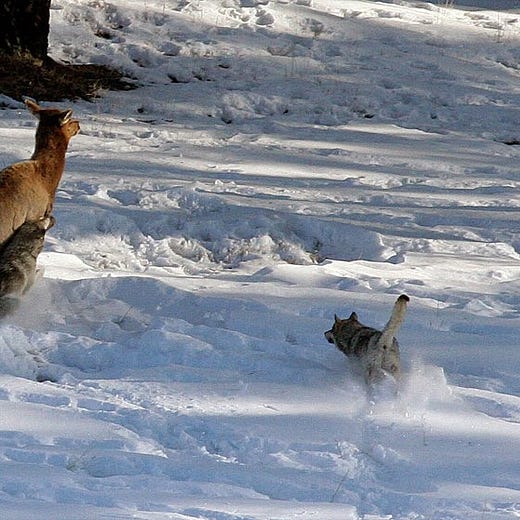
 Ausarchosaur@ausar_theI've once seen it asked why there are no dogs as big as the biggest big cats. The answer is kind of simple: dogs often hunt in packs. This effectively gives them the mass needed to bring down large prey; the cat's solution is just to *be* bigger. But how do we explain lions?
 10:45 PM · May 31, 2023 · 74.4K Views24 Replies · 144 Reposts · 1.65K Likes
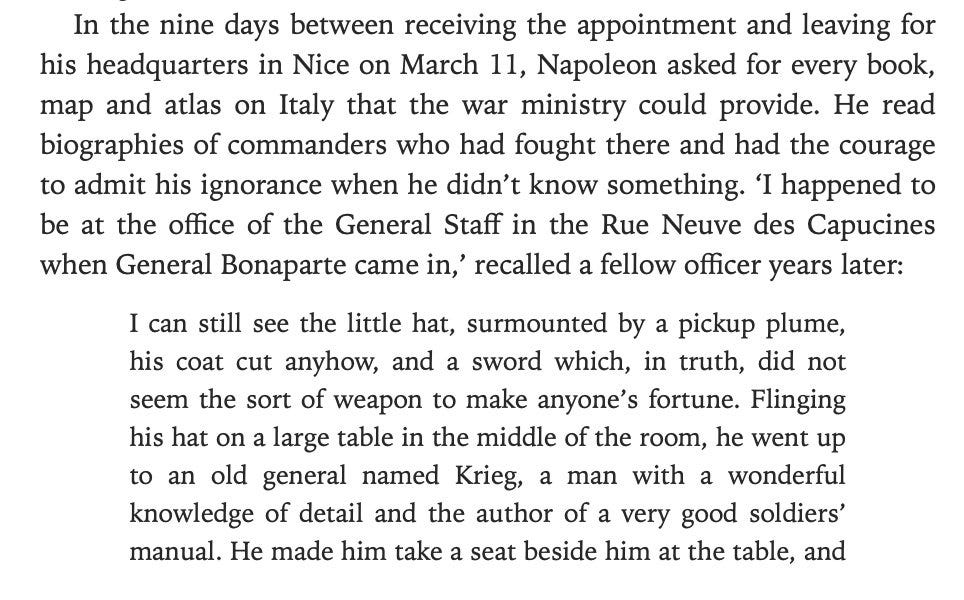
It seems like two of the three most important battles of the 3rd coalition, Trafalgar and Ulm, were almost singularly “caused” by individual top-level command incompetence; not that the respective sides didn’t have enduring advantages/disadvantages corresponding to their 1 sided victory (France on land and Britain at sea, respectively) or that the result wouldn’t have happened another way, but, zooming in on that battle & its prelude and individual command decisions that could have gone differently, or even “normally”, it feels like those leaders were worth “-40,000 troops”, as Napoleon was said to be worth +40,000. Which raises some broader questions left as an exercise to the reader.
[Ulm: endless vacillation, army essentially outmaneuvered and entirely beaten without getting to fight at all, by army of similar size, also without escaping either; Trafalgar: in a world historical level of “things you don’t want your subordinate commander to do”, the French admiral decides to fight a decisive battle after the need has passed (the army of the channel has moved on (because that admiral messed up earlier, not clearing the way for them)), because he learned he was about to be fired for incompetence (lol), and so he iacta’d the alea, with results that would become the famous event we all know today]
Why didn’t ships of the line in age of sail experiment with metal armor plating? Too heavy and slow without steam? Too expensive? Mast/rigging/sails still vulnerable (French practice to aim there, vs. British at hull). Korean turtle ships show some version is possible, in limited/coastal form at least. (And what about in the Mediterranean)
Maybe it wasn’t any one of those factors but the combined weight of them; given how obvious an idea it was, and the Royal Navy’s general high level of competence, they must have experimented with it. Given the chaos of battles and the clumsiness of ships, plus the chance of attack from multiple directions, it seems very hard to assume armor is facing the right way even with competent captain and crew—“why weren’t the backs of ships more heavily armored” is then another Q. Maybe comes down to weight? Story of officers throwing their personal belongings overboard before Trafalgar to get the small % weight reduction, like fighter jets dropping their fuel tanks. Odoreida@odoreida@norvid_studies wonder this too -they were copper sheathed on the bottom so why not thicker metal higher up - or even just on stern to avoid risk of getting raked? Maybe idea was competent captn and crew should manoeuvre to avoid this10:07 PM · Jun 1, 2023 · 128 Views1 Reply · 2 Likes
Many Napoleonic battles (off the top of my head Lodi, Arcole... crossing the Berezina... Leipzig... Friedland) involved fighting across a bridge, or retreating over one, as a key or decisive moment; by WW1 I think this didn’t happen at all, because firepower made it impossible. But it’s the same riverine West European terrain, so... what did the contested river crossings look like, then.
In which era was it the worst to be a sailor on a warship? (the Face of Naval Battle question)
Two general ???:
-I don’t really “get” the Battle of Poltava
-Early career Rommel apparently captured 9000 Italian troops with 150 of his own soldiers and basically no losses... hard to understand.
Very basic optics confusion: once vision gets augmented by telescopes and binoculars, does eyesight still make a difference?
For e.g., two ships observing each other from their tallest point with equivalent spyglass tech; does the spotter with slightly better vision still see further? By resolving the blur at the edge of spyglass range more clearly... but that seems like a different kind of visual acuity than resolving distant objects, as well… in conclusion: ???
Which events in history sound the most totally made up, an interesting exercise.
- Ryan Moulton@moultano@norvid_studies @sir_deenicus @AISafetyMemes @Simeon_Cps This might be a good example actually. Does understanding an argument of length n as an integrated whole instead of piecewise require exp(n) compute?8:19 PM · Jun 5, 2023 · 210 Views1 Reply · 3 Likes
- Ryan Moulton@moultano@norvid_studies @sir_deenicus @AISafetyMemes @Simeon_Cps Or similarly, the information density of all human languages is about the same. Suppose you were designing the optimal language for an intelligence of scale n. What would its information density be?8:21 PM · Jun 5, 2023 · 237 Views1 Reply · 4 Likes
- norvid_studies@norvid_studiesI have trouble understanding this attitude that the data from the past is too fragmentary to interpret broad patterns, on the comparison of: -learning enormous amount of detailed and chronological information about preliterate history from *tiny* shards of information--
 "Online Rent-a-Sage" Bret Devereaux @BretDevereauxWe have snapshots of the size of the equestrian order in the Republic, but no similar data in the empire and the complexity of equites equo suo vs. equo publico renders even those figures fraught. I *cannot* tell you with certainty if the number of equites rises or falls. 9/5:10 PM · Jun 5, 2023 · 313 Views1 Reply · 1 Like
scraps of DNA, single individual artifacts.
-inferring huge amount of information about vanished ecosystems millions of years ago, again from scattered, fragmentary, single data points
-for literate agrarian era we have overlapping and crosshatching lines of evidence from genetic evidence, artifacts, archaeological digs, coinage, pollution traces in ice cores, disease and health information from burials, contemporaneous written records, and *actual written historical accounts*. Okay, there isn’t full coverage panoptical survey data; we don’t have exact data on equites equo suo vs. equo publico. But compared to what we get from order of magnitude worse data on earlier epochs, we can probably infer a LOT.
How much more resilient would Tsarist Russia (and Weimar Germany) have been if they made a habit of executing their extreme revolutionaries instead of giving them short-to-medium prison sentences, as their descendent regimes did (notable how all of Hitler, Stalin, Lenin previously arrested and/or exiled)? (the Sulla->Caesar->Octavian question; or the Reign of Terror->Thermidor->Brumaire question...). Was there a meaningful human capital restriction on motivated individuals trying to overthrow the government? Or would demand create its own supply, for the most part.
What’s the meaning of this joke
🌌 Observer of Suns@ObserverSunsa cool algorithmic trick is that you can compute the elementwise product of two sequences of N numbers in only O(N²) time by using the DFT to convert them to both the frequency domain, taking their convolution, and converting back.11:36 PM · Jun 6, 2023 · 544 Views6 LikesIf you rerun the history of earth 1 million times from 15kya with no sheep or goats, in how many of those earths are horses hunted to extinction before being domesticated.
How much damage did the Great Purge do to the soviet army? Ideally as a %.
Related trivia question would be what’s the highest rank at which Nazis killed more Soviet officers than the Communists did.Related counterfactual: if US just severed all ties with Europe in late 1943 (don’t ask questions), would the USSR have been a) able and b) willing to go all the way to the Atlantic and unify the Continent under the red banner? Or do they still just stop in Germany. i.e., was the main counterfactual effect of D-Day to keep Europe free from communism, rather than Nazism.
 Dedicating Ruckus@ded_ruckushmm history counterfactual where no D-day, but the Soviet offensive from the east supported by Western materiel still happens how does that go? could the Soviets still have rolled up Germany in a one-front war?
 Maxim @maximillian1910@witte_sergei @crypteez Neither was Dday the big game changer in the course of the war. Stalingrad the Kursk battle and operation Bagration were much much more significant. Dday had an important but marginal contribution it simply speeded things up.6:45 PM · Jun 8, 2023 · 2.37K Views8 Replies · 15 Likes
 Thales of Florida@FloridaThales@ded_ruckus A fun corollary to this question - and a few alt history novels tried to answer it - what if the Germans had made peace with the Soviets. Could the Allies have rolled them from the West without the Eastern Front?7:16 PM · Jun 8, 2023 · 198 Views5 Likes
- norvid_studies@norvid_studies"most impacted" probably means "added the most calories above replacement" or "added the most lethal pathogens above replacement", * duration & geographic breadth of exposure. i would guess cow or sheep, and food effects > disease effects of eg malaria/yellow fever (only tropics)
 Ludovic Orlando @LudovicLorlandoNeed help with my next lecture. Here is a list of animals. Tell us which most impacted human history, and why 1-dog 2-cat 3-pig 4-sheep/goat 5-cattle/zebu/buffalo 6-chicken/turkey 7-flea/lice 8-lama/guanaco 9-horse/donkey/mule 10-camel/dromedary 11-rat 12-mosquitoe Please RT11:29 AM · Jun 7, 2023 · 538 Views1 Reply · 1 Repost · 11 Likes
 Friedland looks a lot like a mirror image of Aspern-Essling; smaller force caught crossing with its back to a river and pinned against it on three sides by a larger force; but Napoleon managed to retreat back across the Danube with 7k dead/16k wounded against 4k/16k Austrians, a loss but not a decisive one, whereas Friedland was a devastating rout for Bennigsen. Why such different outcomes?
Could ask the more general question, when do armies in this era try to pursue after a victory, vs. not; having cavalry helps a lot; nightfall often seems to break off pursuit; Napoleon unusually aggressive in pursuing defeated armies to decisive result; but why didn’t others copy?
 Brad Neuberg@bradneubergIf someone were to magically transport a TSMC 3nm semiconductor into a 1975 Intel lab, would scientists of that era have been able to understand it or even image it? Any retired semiconductor folks on here who could speak to that?4:57 PM · Jun 8, 2023 · 20.8K Views14 Replies · 6 Reposts · 110 Likes
 (((ل()(ل() 'yoav))))👾@yoavgoits telling that we manage to reduce model parameters to 4 bits (and recently also with reports on 3, 2 and even 1 bits), but not to significantly reduce the number of parameters (of an already trained model). but WHAT is it telling? are there some interesting theory connections?9:43 AM · Jun 9, 2023 · 22.5K Views19 Replies · 4 Reposts · 82 Likes
Three questions:
1. How much was WW1 a “dry brush overhang” of a fully industrial age European war that was basically guaranteed to happen at least once, over something, in the next 30 years; i.e. running the European state system 1 million times from 1900... vs. not being that; likewise what % of wars end up as short sharp shocks that readjust some territory but don’t lead to massive devastation or unstable peace; and
The Last Great Arrakian Dynasty@cruelsardaukar@norvid_studies WW1 and WW2 are less coupled than people think Or, if you say WW2 was caused by WW1 then WW1 was caused by the Franco-Prussian War which was caused by the Napoleonic Wars which was caused by the American Revolution which was caused by the 7 Years War The Last Great Arrakian Dynasty @cruelsardaukar@norvid_studies WWI contributed to causing WWII but: (1) There was a 20 year gap between one ending and one starting (2) It wasn't the war but rather the poorly designed and implemented peace treaty that was the causal link (3) Great power wars pre-Pax Americana happened every 1-2 generations3:20 PM · Jun 10, 2023 · 195 Views1 Reply · 2 Likes
2. What form does the increasingly obvious possibility of the development of nuclear weapons, and then the ensuing nuclear arms race, take in a world where they weren’t rushed into production as soon as possible in the context of a wartime crash program? Presumably there are still hostile armed blocs in this world so nuclear arms race still happens, but...
3. How much does lack of general European war also suppress communist revolutions, as Russian communist state was the darling child of German invasion, Chinese communism of Japanese invasion knocking out their nationalist rivals... other examples... and then a “Concert of Europe” for the 1900s and Asia as well, keep communist revolutions suppressed; vs. them just happening anyway.
“?”: I’d view Tsushima as more an effect than a cause of Japanese naval dominance over Russia in the 1900s; it was nice to get in early but Japan was industrializing fast and [close to homeland] + [navy] was way more vital than [remote eastern province] + [need enormous European land army] in terms of respective state capacity. Unless a decisive loss in Russo-Japanese war either put Japan off expansion permanently (how?) or halted their modernization and industrialization, and given the lack of any equivalent driven efficient modernizing tendency in the Russian fleet + the need to operate fleets in three theaters + having other unignoreable strategic priorities vs. home navy being Japan's #1, I think Japan still surpasses Russia in the region no matter what.
norvid_studies@norvid_studies@lonemapleleaf I'd view tsushima as more an effect than a cause of japanese naval dominance over russia in the 1900s; it was nice to get in early but japan was industrializing fast and [close to homeland] + [navy] was way more vital than [remote eastern province] + [need enormous european5:51 PM · Jun 10, 2023 · 270 Views1 Reply · 1 LikeIrresolvable question is how much the prestige and demonstration of the successful Russian revolution inspired copycats elsewhere.
- norvid_studies@norvid_studies@lonemapleleaf something else I don't have a good sense of is how much the russian far east mattered to the overall ~ww2 russian economy and war effort, vs being basically 'nice to have' and like an african colony to a european country. significant for LL pipeline, at least, but as territory?6:59 PM · Jun 10, 2023 · 142 Views2 Replies · 1 Like
- norvid_studies@norvid_studies@lonemapleleaf this brings up third thing I don't understand: how much is submarine blockade more like a "frictional attrition" problem vs a "true blockade" problem. i.e. if US accepts slower delivery and reduced turnaround capacity and7:15 PM · Jun 10, 2023 · 159 Views1 Reply · 1 Like
“Can Russia hold onto a far Eastern empire and/or anti-Japanese defensive alliance if they either win decisively, or pull out a draw in 1905”: imo no, but it’s tough to make predictions, especially about the past.
 Object Of Objects@ObjectOfObjectsISTM feudalism can't compete with modern forms of government. But also ISTM that classical governments were more similar to modern governments than to feudalism, and they were replaced by feudalism. What am I missing?9:25 AM · Jun 11, 2023 · 345 Views1 Reply · 1 Repost · 4 Likes
Can LLMs translate any book now? [June 2023]
What is it like to be a tetrachromat, basically.
Ryan Moulton@moultanoDo tetrachromats feel viscerally that screens aren't full color? Cody Moser @LTF_01Color differentiation is controlled by three cone cells in the retina. Genes encoding these are on the sex differentiated X chromosome. Up to 15% of the world's womem have functional genes for tetrachromacy, four cone cells, potentially extending their range of color perception.3:49 PM · Jun 11, 2023 · 1.25K Views2 Replies · 2 Reposts · 13 Likes
What does it mean when a GPT is quantized?
re: rainbolt:
norvid_studies@norvid_studiesat this point how much of his performance is like super GMs memorizing hundreds of thousands of positions of theory, but for dirt roads in albania [eric hansen voice] "light ochre dirt, one fence post tilted, shed in the distance with corrugated metal visible... is this theory?" rainbolt @georainbolti just guessed the exact road in 0.1 second10:15 PM · Jun 11, 2023 · 560 Views6 Likes
 rainbolt@georainbolti just guessed the exact road in 0.1 second2:57 PM · Jun 11, 2023 · 11.8M Views401 Replies · 2.78K Reposts · 78.6K Likes
- norvid_studies@norvid_studiesunder what conditions is ~1 course worth of a field: a) helpful b) does nothing c) actively toxic
 John D. Cook @JohnDCook@norvid_studies @isomorphisms There‘s a lot of really useful vocabulary in economics: transaction costs, opportunity costs, regulatory capture, rent seeking, … All good general knowledge. Maybe macro economics is where a little knowledge is more dangerous. Even a lot is dangerous. :)11:48 AM · Jun 12, 2023 · 439 Views1 Reply · 1 Repost · 3 Likes
 - norvid_studies@norvid_studieshow much did the post-demographic transition european wars, when population was no longer constrained by malthusian ceiling on total calorie production, cut the european population today? ie if no ww1/ww2, what is france, germany, russia...The Last Great Arrakian Dynasty @cruelsardaukarThe alternate universe where there are 150 million Frenchmen is a fascinating one because a France *half* the size of America could genuinely compete with it in a LOT of matters since they'd care SO MUCH MORE5:38 PM · Jun 12, 2023 · 391 Views1 Reply · 4 Likes
Why nature’s inordinate fondness for beetles. What does it see in them
- norvid_studies@norvid_studiessurprised and somewhat confused by this-- not all advantages should be equally exploitable, ie they don't all have the same return to skill, and material imbalances seem subtle enough for this to apply. "it applies but not much" is consistent, at least lichess.org/@/marcusbuffet…
 3:23 PM · Jun 13, 2023 · 341 Views1 Reply · 3 Likes
 Why did Ottoman armies start losing constantly after the Siege of Vienna?
What was Eugene’s influence on Napoleon?
 Prince Vogelfrei 🐦⬛@PrinceVogelWhat changed in computer security such that you never hear about people getting viruses on their phones or generally hardly at all6:15 PM · Jun 13, 2023 · 56.3K Views32 Replies · 8 Reposts · 437 Likes
(some brainstorming at thread)
norvid_studies@norvid_studies"what would be the Plutarch Parallel Lives pairings", a fun exercise for any era3:38 PM · Jun 13, 2023 · 884 Views3 Replies · 1 Repost · 2 LikesI don’t really understand how the “Wuhan virology researchers were the patient approximately zero through three” information can come out now, but not any time in the intervening three years. It must have been known immediately, and somewhat widely—including intelligence agencies outside China. Why not before? Say, only two years after the origin of covid? How was the information kept secret? (but then now released)
 niplav is@niplav_siteDifferent games have different attack/defense balances: soccer is much more defense-heavy, volleyball is attack-heavy. But how does this vary across capability of the players? Is soccer by amateurs even defense-heavier than professional soccer? How about volleyball or chess?4:13 PM · Jun 14, 2023 · 457 Views4 Replies · 4 Likes
- norvid_studies@norvid_studiesis there a soccer variant where they widen the goal until it becomes a high scoring game, solving the boring 1-1 draw -> penalty kick minigame meta? there are complaints about soccer draws but it's an artifact of goal size, more than of soccer itself4:22 PM · May 8, 2023 · 291 Views1 Reply · 6 Likes




On 223:
Small reactors are bad for square-cube reasons.
Shielding is just too heavy for road vehicles, even something like a main battle tank.
Even trains have their load limits exceeded by reactor shielding - trains can carry a lot but it needs to be spread over many axles, whereas the reactor shields have to be concentrated in one place. Plus derailments are scary. The soviets studied this with the NS400 and gave up. Also if this was viable you probably just build catenaries powered by nuclear power stations and run electric locomotives.
Having to rebuild your whole supply chain to allow for nuclear servicing is annoying, even though you don’t need to refuel.
There is no demand for nuclear-powered aircraft because, again, the reactor is too heavy for commercial applications and the military applications are obsoleted by SLBMs, which can reach anywhere a nuclear bomber can reach, can loiter for much longer due to food stores, and are really really hard to detect.
The nuclear navy did exist with all the nuclear cruisers etc in the 60s and 70s, but this took Rickover to make it happen.
But the main reason it was retired, I think, was that the vessel either needs a super high price tag or a super long life to make the economics work. For a frigate with a 20 year lifespan, you end up spending 3-4 years in the middle with it in dry dock doing refuelling, and the upfront cost just doesn’t pencil out. Modern commercial freighters also have a lifespan around 20-25 yrs, don’t care about having to surface to run generators like subs, and don’t really care about going very fast for hours at a time like carriers.
This is not so true anymore, but in the 20thC you needed highly trained personnel to operate the reactor who needed to be paid well. Navy nukes are famously selected for intelligence, half of Rickover’s job seems like it was producing this class of people.
One problem with the NS Savannah (US nuclear freighter) was that there was constant conflict between the deck officers and the nuclear guys because the latter were paid a lot more.
Other problems: Savannah was built to aura farm and not max out cargo economics, it was retired just before the oil crisis in the 70s, there has never been a commoditised supply chain for mobile reactors - again, Rickover was the only one who could make this work, and even he didn’t get unit costs low enough for the private sector to be really interested. Even if they were, there’s certification, national security…
Nuclear icebreakers worked, but only for the Soviets.
Savannah was, empirically, safe but still faced a lot of pushback e.g. countries like Japan not allowing it to dock because of public perception.
Edit: also, plowshare doesn’t work because ground bursts generate insane amounts of fallout, even with hypothetical ultra-clean warheads like Ripple: https://direct.mit.edu/jcws/article-abstract/23/2/133/101892/Ripple-An-Investigation-of-the-World-s-Most?redirectedFrom=fulltext
I looked into that last year because I was wondering if you could solve climate change by doing rock weathering with Ripple warheads, but even three to four nines of fusion still produces lethal amounts of fallout IIRC